Armenia 2003: Two Ballots, One Day, a Turnout Gap of 62,655
The same voters received two ballots at the same table. In 46 of 56 districts the two counts of participants differed, by 62,655 in total.
Original page on electionscount.info: The Electoral Rights and Falsifications of Elections (2010, PDF), p. 42In 2003 each voter received two ballots: one for a party list and one for a candidate in the single-member district. Both were issued at the same polling station, by the same commission, to the same people. The number of participants in the two votes should therefore be the same in every district.
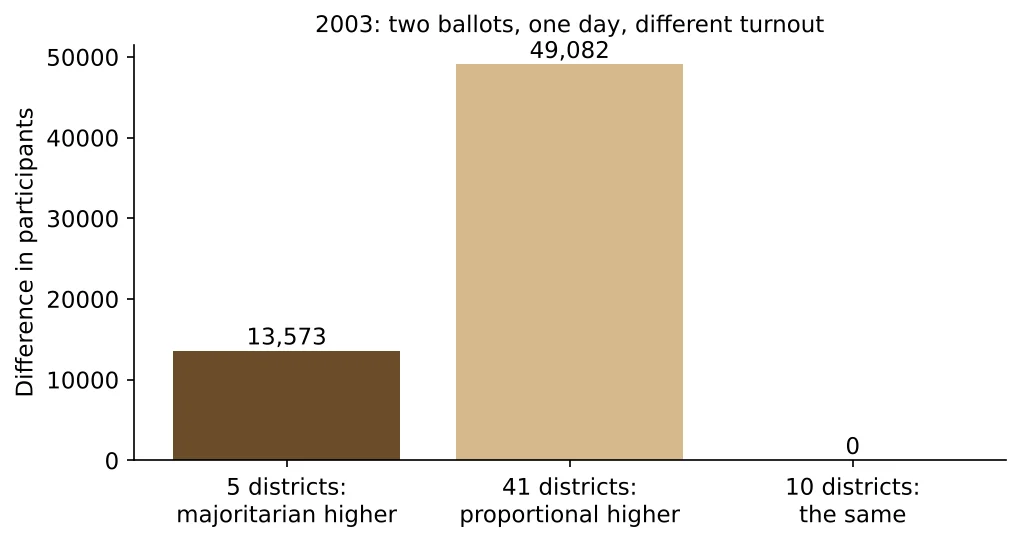
How to read this chart
The 56 districts are divided by which of the two votes reported more participants. The bar height is the total difference.
What it shows
- In 5 districts the district vote had 13,573 more participants than the party-list vote.
- In 41 districts the party-list vote had 49,082 more.
- In only 10 districts did the two numbers agree.
The absolute differences add up to 62,655, or 5.2% of all participants.
Ballots for the party lists, which decided 75 seats, were added more often than ballots for the district candidates.
The book puts this alongside the other arithmetic it found in 2003: 11,460 inaccuracies in the first presidential round, 3,638 in the second and 10,424 in the parliamentary election. “Even the arithmetic errors show what kind of elections took place and what attitude was shown to the summing-up of the results.”
How the votes were added, according to the book: many people voted in others’ names and signed in their place; ballots were stuffed; results were miscounted to reach target figures “even ignoring obvious arithmetic mismatches”; and the bodies charged with upholding the law protected those who did it. It suggests the signatures in the voter lists could have been checked against the specimen signatures held by the passport service.
Source: “The Electoral Rights and Falsifications of Elections” (2010, in Armenian), the earlier Armenian book by the same author, which analyses the officially published figures of each election. The figures here are taken from it; page numbers refer to the PDF.
Data and sources on this site
From the book
This article is based on the 2010 Armenian edition of Electoral Rights and Election Falsification by Lyudvig Khachatryan, which explains the full method, the formulas and the cases behind it.