Armenia 2012: The Higher the Turnout, the Higher the Ruling Party's Share
Where turnout was under 50%, the Republican Party got 31%. Where it was over 80%, it got 60%, and the opposition almost vanished.
Original page on electionscount.info: Party votes depending on turnout %, 2012 (type any percentage)Every page of the 2012 monitoring site has a box at the top: "Parties' votes depending on turnout %. Enter %". Type a turnout figure and the site splits all 1,982 polling stations into two groups, above and below it, and shows each party's share of the vote in both groups. If voters behaved the same way everywhere, the two charts would look alike whatever figure you type. They do not.
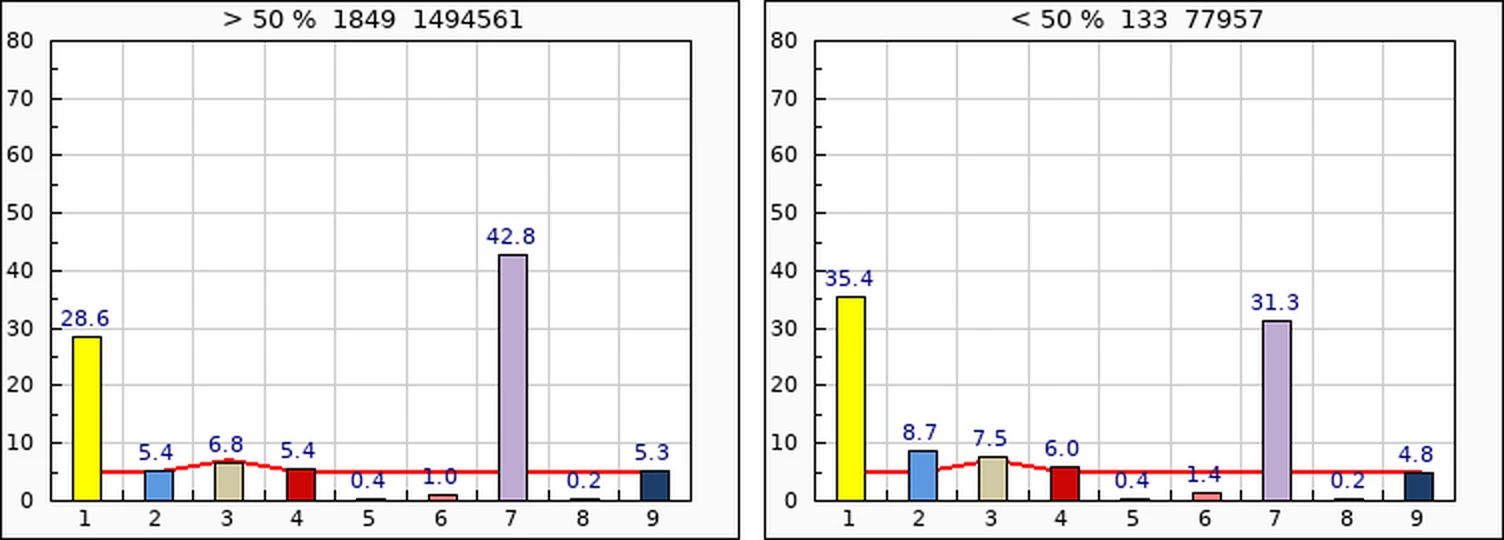
How to read this chart
Bars are the 9 parties, numbered as on the ballot. Left: the 1,849 polling stations with turnout above 50% (1,494,561 participants). Right: the 133 stations below 50% (77,957 participants). The bars are the party's votes as a share of all participants at those stations. The red line is the threshold: 5% for a party, 7% for an alliance.
What it shows
Below 50% turnout the Republican Party (7) had 31.3% and Prosperous Armenia (1) 35.4%, more than the Republicans. Above 50%, the Republicans had 42.8%.
Party numbers: 1 Prosperous Armenia; 2 Heritage; 3 Armenian National Congress (alliance); 4 ARF Dashnaktsutyun; 5 Democratic Party of Armenia; 6 Communist Party of Armenia; 7 Republican Party of Armenia; 8 United Armenians Party; 9 Rule of Law (Orinats Yerkir).
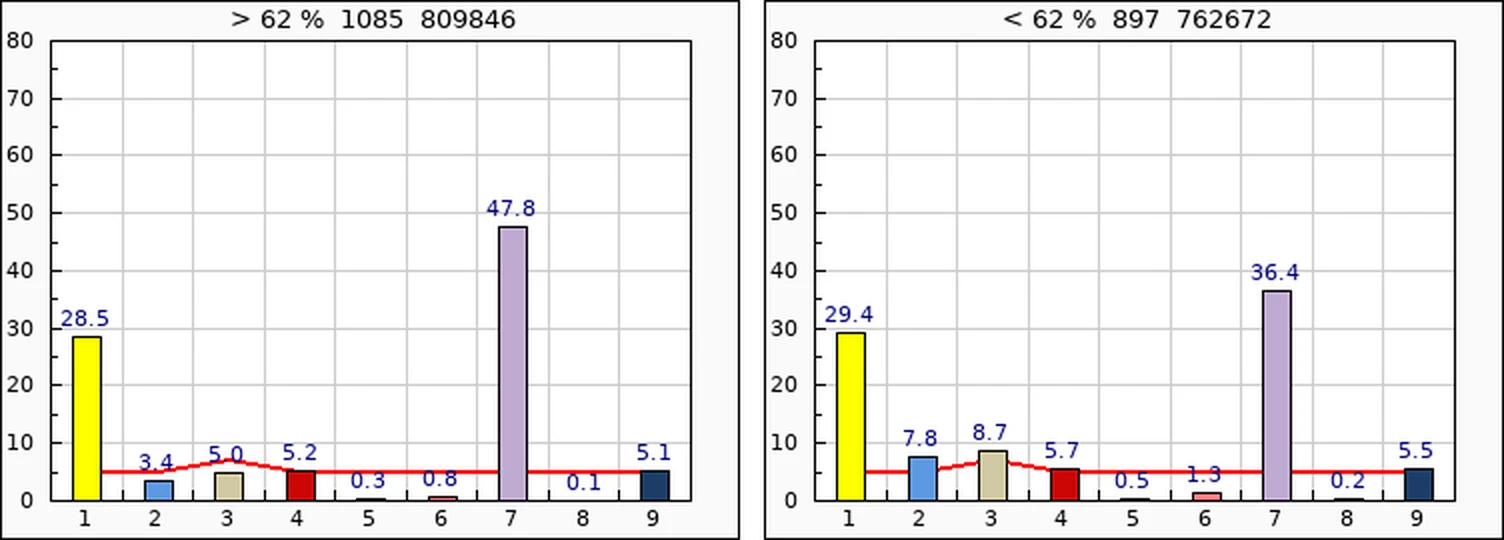
How to read this chart
Bars are the 9 parties, numbered as on the ballot. Left: the 1,085 polling stations with turnout above 62% (809,846 participants). Right: the 897 stations below 62% (762,672 participants). The bars are the party's votes as a share of all participants at those stations. The red line is the threshold: 5% for a party, 7% for an alliance.
What it shows
At 62%, the site's example, the stations split almost in half. The Republican Party had 47.8% above and 36.4% below. Heritage (2) had 3.4% above and 7.8% below, the Armenian National Congress (3) 5.0% and 8.7%. Prosperous Armenia was nearly the same in both, 28.5% and 29.4%.
Party numbers: 1 Prosperous Armenia; 2 Heritage; 3 Armenian National Congress (alliance); 4 ARF Dashnaktsutyun; 5 Democratic Party of Armenia; 6 Communist Party of Armenia; 7 Republican Party of Armenia; 8 United Armenians Party; 9 Rule of Law (Orinats Yerkir).
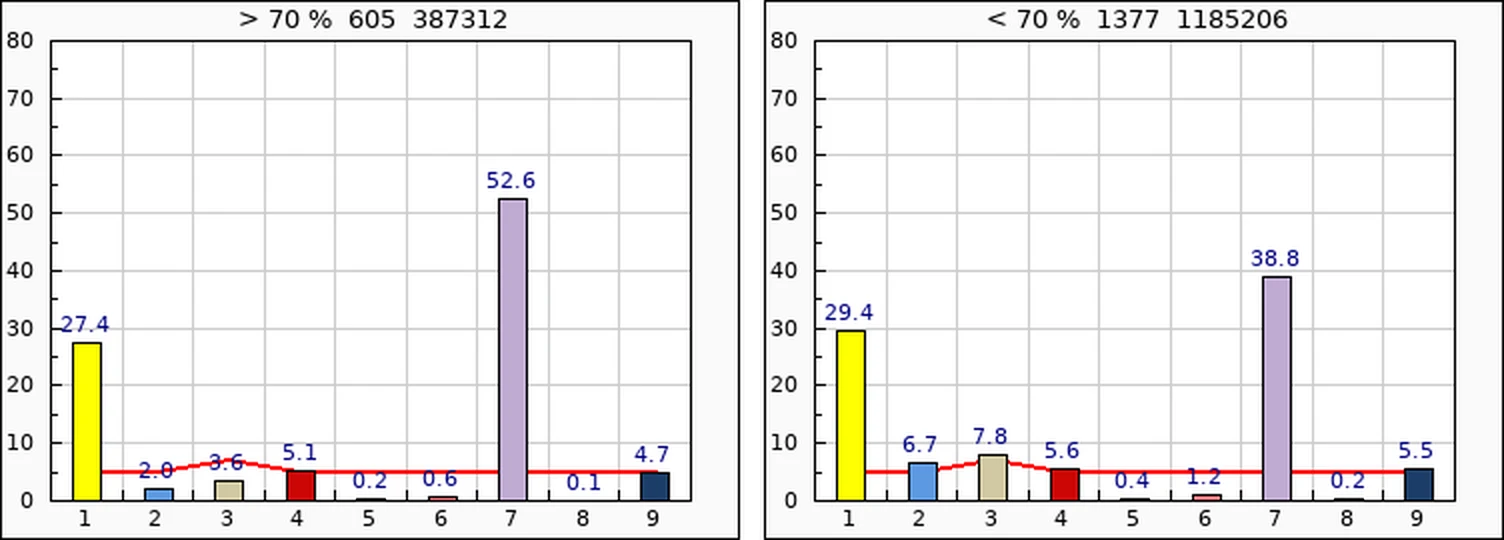
How to read this chart
Bars are the 9 parties, numbered as on the ballot. Left: the 605 polling stations with turnout above 70% (387,312 participants). Right: the 1,377 stations below 70% (1,185,206 participants). The bars are the party's votes as a share of all participants at those stations. The red line is the threshold: 5% for a party, 7% for an alliance.
What it shows
Above 70% turnout the Republican Party passed half of the vote, 52.6%; Heritage fell to 2.0% and the Congress to 3.6%, both far below the threshold.
Party numbers: 1 Prosperous Armenia; 2 Heritage; 3 Armenian National Congress (alliance); 4 ARF Dashnaktsutyun; 5 Democratic Party of Armenia; 6 Communist Party of Armenia; 7 Republican Party of Armenia; 8 United Armenians Party; 9 Rule of Law (Orinats Yerkir).
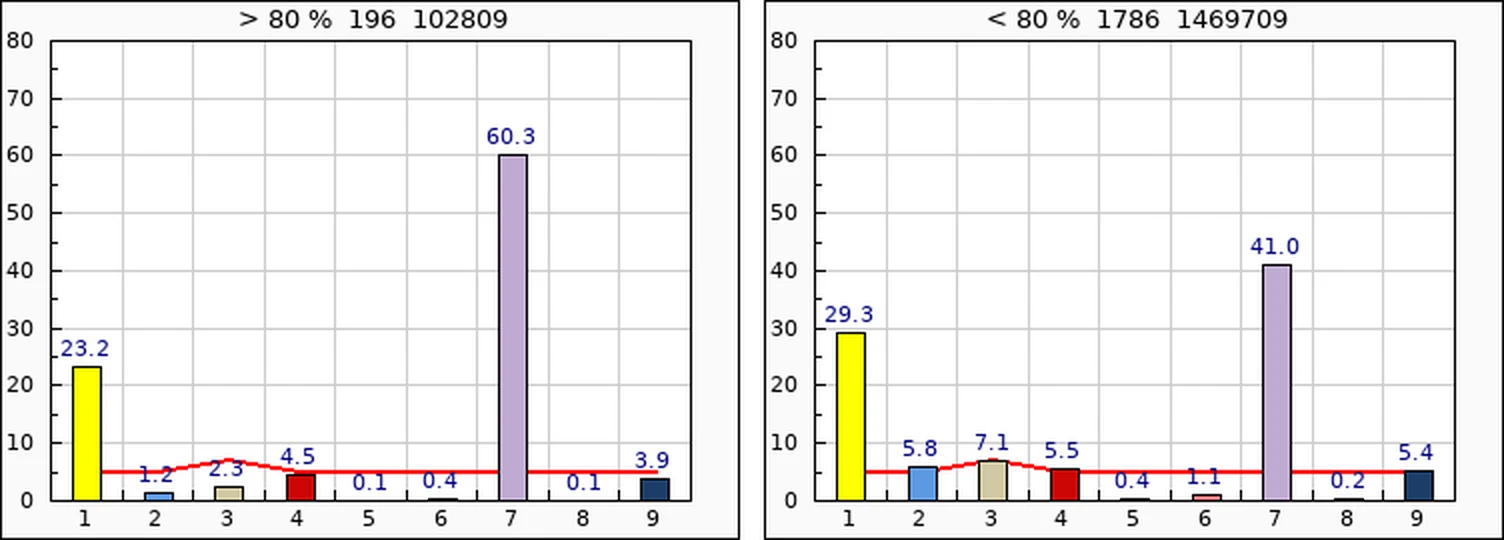
How to read this chart
Bars are the 9 parties, numbered as on the ballot. Left: the 196 polling stations with turnout above 80% (102,809 participants). Right: the 1,786 stations below 80% (1,469,709 participants). The bars are the party's votes as a share of all participants at those stations. The red line is the threshold: 5% for a party, 7% for an alliance.
What it shows
At the 196 stations with turnout above 80% the Republican Party had 60.3%. Heritage had 1.2%, the Congress 2.3%, and Prosperous Armenia dropped to 23.2%.
Party numbers: 1 Prosperous Armenia; 2 Heritage; 3 Armenian National Congress (alliance); 4 ARF Dashnaktsutyun; 5 Democratic Party of Armenia; 6 Communist Party of Armenia; 7 Republican Party of Armenia; 8 United Armenians Party; 9 Rule of Law (Orinats Yerkir).
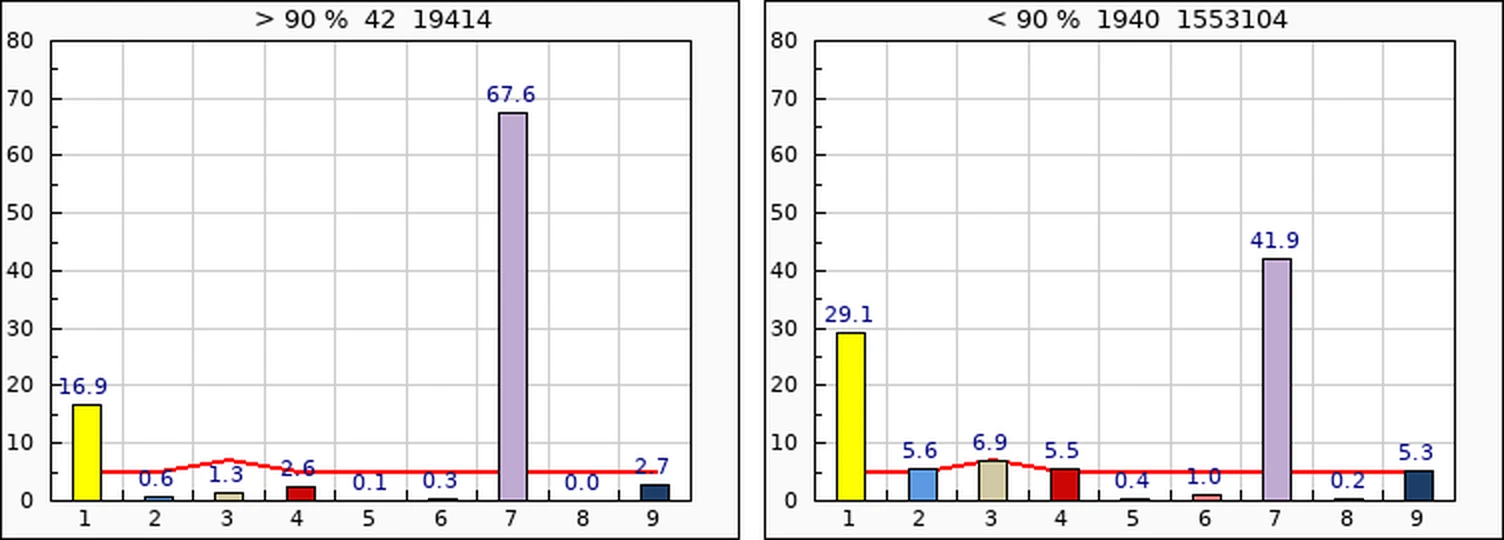
How to read this chart
Bars are the 9 parties, numbered as on the ballot. Left: the 42 polling stations with turnout above 90% (19,414 participants). Right: the 1,940 stations below 90% (1,553,104 participants). The bars are the party's votes as a share of all participants at those stations. The red line is the threshold: 5% for a party, 7% for an alliance.
What it shows
At the 42 stations with turnout above 90%, the Republican Party had 67.6% of all participants and Prosperous Armenia 16.9%; Heritage, the Congress and every other party together had less than 6%.
Party numbers: 1 Prosperous Armenia; 2 Heritage; 3 Armenian National Congress (alliance); 4 ARF Dashnaktsutyun; 5 Democratic Party of Armenia; 6 Communist Party of Armenia; 7 Republican Party of Armenia; 8 United Armenians Party; 9 Rule of Law (Orinats Yerkir).
One party gained, the others lost
| Stations with turnout | Republican Party | Prosperous Armenia | Heritage | Congress |
|---|---|---|---|---|
| below 40% (19 stations) | 33.2% | 39.7% | 11.2% | 6.7% |
| below 50% (133) | 31.3% | 35.4% | 8.7% | 7.5% |
| above 62% (1,085) | 47.8% | 28.5% | 3.4% | 5.0% |
| above 70% (605) | 52.6% | 27.4% | 2.0% | 3.6% |
| above 80% (196) | 60.3% | 23.2% | 1.2% | 2.3% |
| above 90% (42) | 67.6% | 16.9% | 0.6% | 1.3% |
Every extra point of turnout brought the ruling party a larger share and every other party a smaller one. Real voters who decide to come out do not all vote for one party. Added ballots and signatures do. This is the same pattern as in the 2015 referendum, and the opposite of what the method found in 2021, where the winner's share stayed flat.
The official result was Republican Party 44.12%, Prosperous Armenia 30.19%, Congress 7.10%, Heritage 5.78%, ARF 5.68%, Rule of Law 5.52%. The charts count each party's votes as a share of all participants, including invalid ballots, while the official percentages are shares of valid votes, so the chart figures are a little lower.
Try it yourself: open the chart page, type any percentage in the box and press View. At 20% the second chart stays empty, because no polling station had turnout below 20%.
Data and sources on this site
From the book
This article is based on Chapter VI of Electoral Rights and Election Falsification by Lyudvig Khachatryan, which explains the full method, the formulas and the cases behind it.