Armenia 2002: The Electoral Code Behind the 2003 Elections
The 2002 code reversed the balance: 75 seats by party list, 56 in districts. The commissions still depended on the president and the parliamentary parties.
Original page on electionscount.info: The Electoral Rights and Falsifications of Elections (2010, PDF), p. 39A new Electoral Code was adopted in 2002, before the local elections of that year and the presidential and parliamentary elections of 2003.
What changed
- The number of seats elected by party list rose from 56 to 75, and the number elected in single-member districts fell from 75 to 56, in a parliament of 131.
- The Central Electoral Commission and the district commissions were formed from one member appointed by each party (or alliance member party) with a group in the current or dissolved parliament, plus three members appointed by the President.
- Precinct commission members were appointed by the members of the district commission, one each.
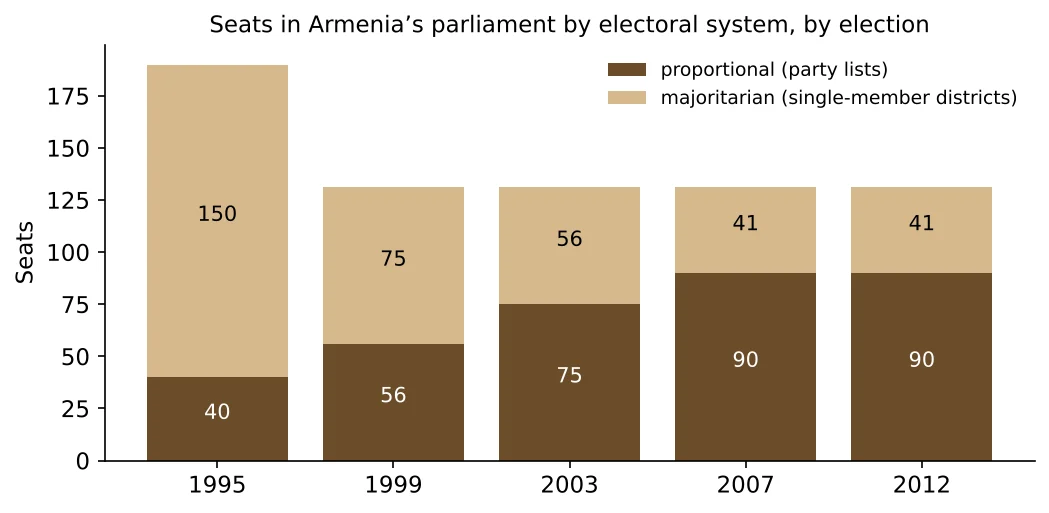
How to read this chart
Each bar is one parliamentary election. The dark part is the seats distributed between party lists in proportion to their votes; the light part is the seats won in single-member districts by whoever came first.
What it shows
2003 was the first election in which party lists elected the majority of deputies.
The book’s assessment
Apart from these and other changes of little or of harmful significance, the author writes, the system was kept: the results again depended mostly on the authorities, the electoral commissions, “neighbourhood and money authorities” and law-enforcement bodies. The dependence of the results on real votes would be secured only as far as organised resistance to fraud could secure it, and as far as it suited those who held the levers of power.
The elections held under this code are analysed in the next articles: the 2003 presidential election and the 2003 parliamentary election.
Source: “The Electoral Rights and Falsifications of Elections” (2010, in Armenian), the earlier Armenian book by the same author, which analyses the officially published figures of each election. The figures here are taken from it; page numbers refer to the PDF.
Data and sources on this site
From the book
This article is based on the 2010 Armenian edition of Electoral Rights and Election Falsification by Lyudvig Khachatryan, which explains the full method, the formulas and the cases behind it.