Armenia 2018: Mismatches in the Protocols, Coupons and Stamps
In 2018 the protocol numbers disagree at 405 polling stations, by 796 in total: about a quarter of the mismatches found in 2013 and 2015.
Original page on electionscount.info: Mismatches and inaccuracies in the electoral numbers, 2018Armenia held early parliamentary elections on 9 December 2018, half a year after the change of power. Eleven lists stood. Nikol Pashinyan’s My Step alliance won about 70% of the vote; Prosperous Armenia and Bright Armenia also passed the threshold (5% for parties, 7% for alliances). Turnout was 48.6%.
Under the 2016 Electoral Code the count changed: each voter received a numbered coupon and the commission stuck a self-adhesive stamp on each ballot. The page “Mismatches and inaccuracies in the electoral numbers” checks, for each of the 2,010 stations, whether coupons, stamps, participants and ballots agree in the final protocols. The general method is in signs of ballot stuffing in the numbers, which uses this page as its example; this article gives the 2018 figures.
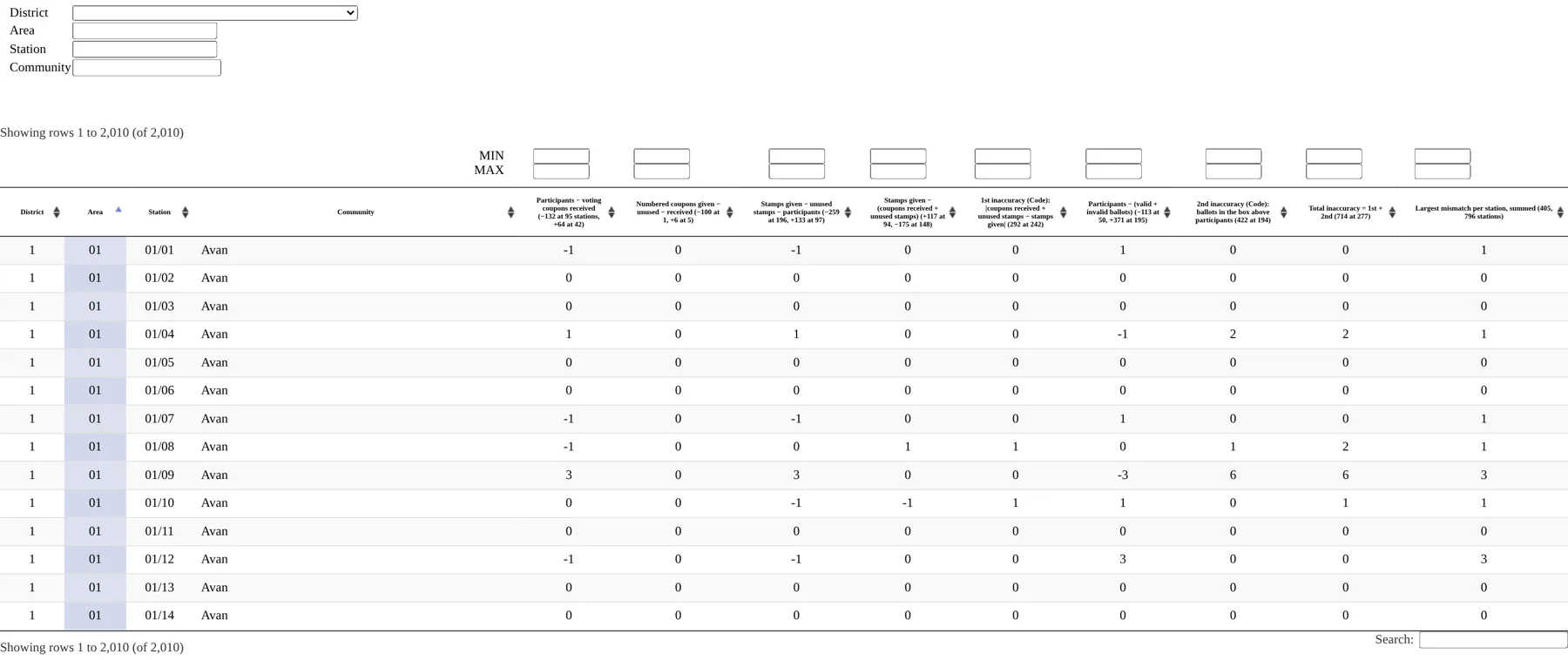
How to read this chart
- Participants − coupons received.
- Numbered coupons given − unused − received.
- Stamps given − unused stamps − participants.
- Stamps given − (coupons received + unused stamps).
- 1st inaccuracy (as defined in the Code).
- Participants − (valid + invalid ballots).
- 2nd inaccuracy (Code).
- Total inaccuracy = 1st + 2nd.
- Largest mismatch at the station.
A zero means the two numbers agree. The headings give the totals.
What it shows
At Avan 01/09 participants exceed the ballots in the box by 3, and the stamps given exceed coupons plus unused stamps by 3.
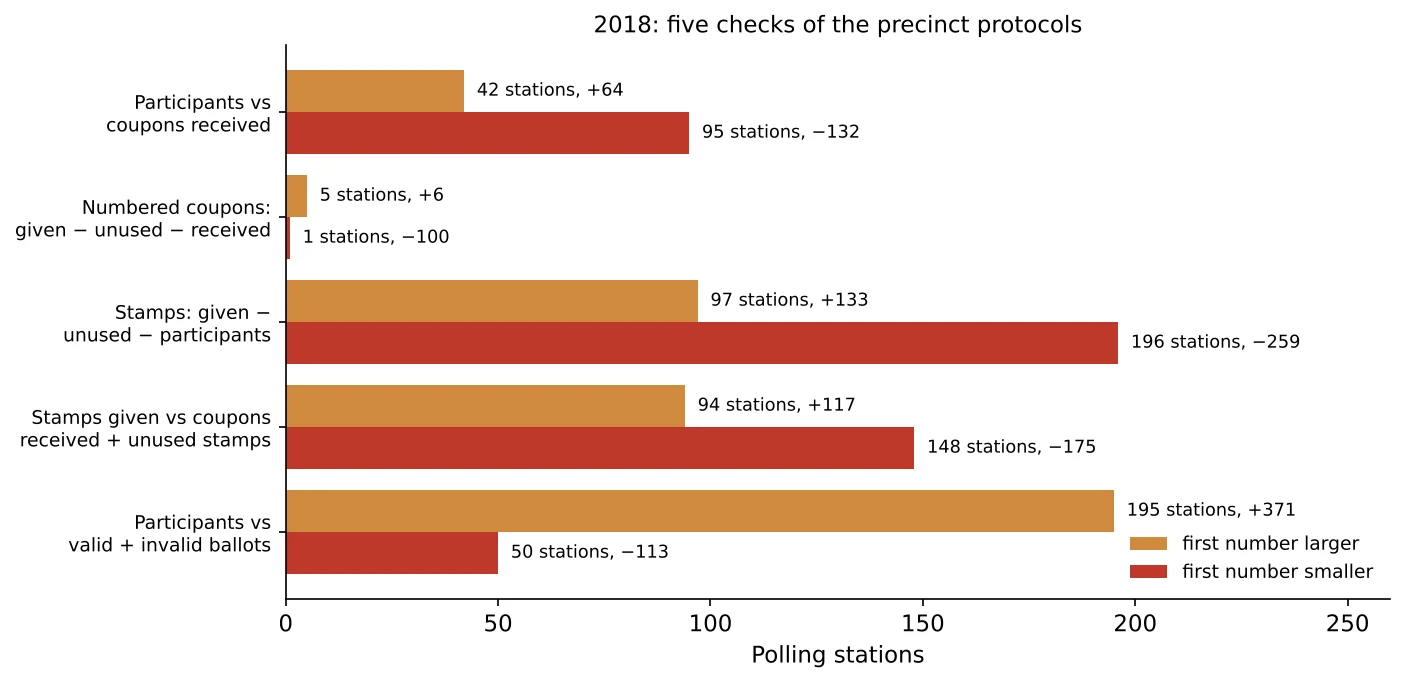
How to read this chart
Each pair of bars is one check: orange where the first number is larger, red where it is smaller, with the stations and the total difference.
What it shows
- Participants vs ballots in the box: 195 stations had more participants than ballots (+371), 50 more ballots than participants (−113).
- Stamps: 196 stations used more stamps than participants (−259), 97 fewer (+133).
- Participants vs coupons: 95 (−132) and 42 (+64).
- Numbered coupons: one station is off by 100; five by 1–2.
The largest mismatch per station adds up to 796 at 405 stations: about a quarter of the 3,027 in the 2013 presidential election and of the 3,265 in the 2015 referendum.
The largest single case is 29/01 in Abovyan: 100 numbered coupons that are neither unused nor received. The next are 31/31 Gyumri (21 more participants than ballots) and 21/46 Khachaghbyur (19 more ballots than participants).
The two inaccuracies
The Code’s first inaccuracy compares the stamps given to the commission with coupons received plus unused stamps; the table’s figures follow that rule exactly at every station (292 at 242 stations). The second inaccuracy, according to the page’s own explanation, is the excess of ballots in the box over participants, and 0 otherwise. Applied to the protocol numbers, that rule gives 113 at 50 stations. The column titled “2nd inaccuracy” totals 422 at 194 stations: at 143 stations it shows an inaccuracy although participants and ballots agree, and at the 50 stations with surplus ballots it often shows twice the surplus. Whether this column comes from the protocols or from a different calculation, it does not follow the rule printed above it.
A note on the page: the heading of the last column reads “405, 796 stations”; the column itself sums to 796 at 405 stations.
Data and sources on this site
From the book
This article is based on Chapter VI of Electoral Rights and Election Falsification by Lyudvig Khachatryan, which explains the full method, the formulas and the cases behind it.